 Home
Search This Site
Chiropractic Articles
Home
Search This Site
Chiropractic Articles
|
Drug Advertising Debate Heats Up
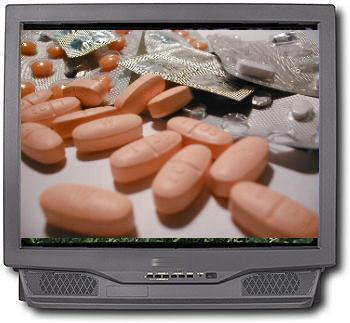
The debate over Direct-to-Consumer Drug Ads, known as "DTCs" has heated up on several fronts as some in the medical profession and government see it as an expensive threat to consumer health, while others see it as the next step in consumer education. In the July 2, 2001 issue of the AMA News, was a report from the recent AMA annual meeting where the debate raged on and the opinions varied.
Dr. Agro summed up his opinion by saying, "The public is not being given the whole truth. By its very nature advertising is biased, and it's compressed. We are not against information being brought to the patient, but we have a problem when it's biased, limited and brought about by multimillion-dollar organizations that have a profit motive only." Even state legislature are starting to get into the debate. According to a report in Reuters Health Jun 27, 2001, "A handful of states have introduced bills this year to force pharmaceutical manufacturers to disclose what they spend on advertising and promoting their products to consumers." State legislatures are not only concerned about the health implications, they are also concerned about the bottom line. Legislation targeting direct-to-consumer (DTC) advertising is part of a growing strategy that states are using to contain double-digit growth in drug spending. According to the National Governors Association and National Association of State Budget Officers, prescription medication now represents the third largest expenditure in state Medicaid budgets. Drug costs under Medicaid are growing about 18% annually nearly double the rate of growth in overall state Medicaid spending, they report. This trend is reflected on a national basis where some of the largest increases in prescription drug utilizations have been shown over the last 5 years. Currently drug companies spend approximately $2.5 billion per year on DTC ads.
|
 Recently, an effort by
many doctors to press the AMA to petition the Food and Drug Administration
and the Federal Trade Commission to ban DTC advertising failed.
Angelo Agro, MD, a New Jersey delegate from Voorhees who proposed a policy
to ban DTC ads said. "We recognize that a ban is just not going to
happen for all sorts of reasons. What we really want is some oversight
with some real teeth." Another dissenting voice came from
Dr. Fryhofer who stated, "Not only do we have to explain to our
patients the nature of the medical problems that they have, but we also
have to discuss why they don't need the drug that was advertised and what
is the best option."
Recently, an effort by
many doctors to press the AMA to petition the Food and Drug Administration
and the Federal Trade Commission to ban DTC advertising failed.
Angelo Agro, MD, a New Jersey delegate from Voorhees who proposed a policy
to ban DTC ads said. "We recognize that a ban is just not going to
happen for all sorts of reasons. What we really want is some oversight
with some real teeth." Another dissenting voice came from
Dr. Fryhofer who stated, "Not only do we have to explain to our
patients the nature of the medical problems that they have, but we also
have to discuss why they don't need the drug that was advertised and what
is the best option."